- Huawei P30 Hands-On
- Crucial MX500 1TB SATA Solid State Drive Review
- Intel’s flawed ‘Rangeley’ Atom C2000 processors are still a ticking time bomb
- Eric Broockman Extreme Networks CTO Interview
- Introducing the D-Link COBRA AC5300 Wave 2 MU-MIMO Wi-Fi Modem Router and Triple Band Wi-Fi explained
- VICHYPER - Australian Hyperloop Interview and Tour
- Kaspersky Keynote and Press Conference - Sydney 2017
- ZOTAC NVIDIA GeForce GTX 1050 Australian Review
- Intel Core i7 Extreme Edition (Codename: Broadwell-E) Processor Australian Review
- ASUS ROG GX700 Liquid Cooled Gaming Laptop Video Preview and Analysis.
- Video Tour - NitroWare experiences HP's new Australian Customer Experience Centre and Intel 6th Gen ‘Skylake’ PCs
- Bose SoundTouch 2015 Wireless Speaker Preview
- NVIDIA GeForce Experience Quarter 4 2015 Update Analysis
- NVIDIA GEFORCE GTX 980 Ti Australian Review - TITANic graphics performance for US $649
- HP Zvr 23.6-inch Virtual Reality Display First Look
- NVIDIA GeForce GTX TITAN X Video Card Australian Review
- Battlefield Hardline - Developer Q&A with Visceral Games
- The NVIDIA GEFORCE GTX 960 REVIEW - EVGA SSC Edition
- NVIDIA'S GEFORCE GTX 980 Apollo 11 Lunar Landing Tech Demo tested
- Monster Cable Premium Black 27.7 Gbps high bandwidth HDMI 2.0 cable test
- 4th Gen Intel Core "Devil's Canyon" Processor Family Preview
- Seagate Business 4-Bay 16TB NAS Review
- MSI Radeon R9 270X HAWK & GeForce GTX 760 HAWK Video Card Review
- Adobe Photoshop CC and AMD Radeon GPU Smart Sharpen Benchmark using OpenCL
- AMD Radeon R9 290X Video Card Review and Analysis
- Never Settle: Forever game bundle: What you need to know and what AMD could have done differently.
- Intel 4th Gen 'Haswell' real world gaming performance
- An Evening with Battlefield 4
- Intel 4th Gen Core i7-4770K 'Haswell' CPU Performance Review
- Our experience with AMD's Never Settle Reloaded game bundle - Trouble with Ubisoft Uplay | Updated
- Crucial MX500 1TB SATA Solid State Drive Review
- ZOTAC NVIDIA GeForce GTX 1050 Australian Review
- Intel Core i7 Extreme Edition (Codename: Broadwell-E) Processor Australian Review
- NVIDIA GEFORCE GTX 980 Ti Australian Review - TITANic graphics performance for US $649
- NVIDIA GeForce GTX TITAN X Video Card Australian Review
- The NVIDIA GEFORCE GTX 960 REVIEW - EVGA SSC Edition
- NVIDIA'S GEFORCE GTX 980 Apollo 11 Lunar Landing Tech Demo tested
- Monster Cable Premium Black 27.7 Gbps high bandwidth HDMI 2.0 cable test
- Seagate Business 4-Bay 16TB NAS Review
- MSI Radeon R9 270X HAWK & GeForce GTX 760 HAWK Video Card Review
- Adobe Photoshop CC and AMD Radeon GPU Smart Sharpen Benchmark using OpenCL
- AMD Radeon R9 290X Video Card Review and Analysis
- Intel 4th Gen 'Haswell' real world gaming performance
- Intel 4th Gen Core i7-4770K 'Haswell' CPU Performance Review
- Our experience with AMD's Never Settle Reloaded game bundle - Trouble with Ubisoft Uplay | Updated
- Huawei P30 Hands-On
- Introducing the D-Link COBRA AC5300 Wave 2 MU-MIMO Wi-Fi Modem Router and Triple Band Wi-Fi explained
- ASUS ROG GX700 Liquid Cooled Gaming Laptop Video Preview and Analysis.
- NVIDIA GeForce Experience Quarter 4 2015 Update Analysis
- HP Zvr 23.6-inch Virtual Reality Display First Look
- 4th Gen Intel Core "Devil's Canyon" Processor Family Preview
- Intel 4th Gen Core Haswell CPU and Graphics Preview - See the future of PC graphics through Intel's Iris.
- Cooler Master's Trigger keyboard might just be the perfect gamers keyboard
- ZOTAC "Inner-Beauty" Small Form Factor PC Preview featuring Z77-ITX WiFI and GeForce GTX 680 AMP! Edition
- Intel Desktop Board DX79TO Preview | Sandy Bridge-E performance on a budget
- Gigabyte GZ-X1 Mid Tower ATX Computer Case Preview
- Telstra Turbo 7 Series 3G Wireless Gateway - First Impressions
- Lian-Li Tyr PC-X2000 HTPC/Gaming Chassis Preview
- Intel’s flawed ‘Rangeley’ Atom C2000 processors are still a ticking time bomb
- Never Settle: Forever game bundle: What you need to know and what AMD could have done differently.
- Price Gouging – Australians pay up to twice as much for Microsoft Windows 7 Anytime Upgrade but not for Windows 8 than the US
- Intel CPU Protection Plan for overclockers – Ploy or Promise ?
- Where did all my printer ink go? Part 2 - Epson
- Where did all my printer ink go? Part 1 - Brother
- How to install Windows Server 2008 R2 or Windows 7 using a LSI 3ware 9650SE RAID card
- Issues with Realtek High Definition Audio device driver for Windows XP
- The front audio ports on my PC do not work – why is this and how can I fix this?
- How to create a dedicated Voice over IP headset for your PC - for free. Part 2.
- How to create a dedicated Voice over IP headset for your PC - for free. Part 1.
- Computer motherboard buyer guide - ECS X48T-A
- Making the most of dual onboard Ethernet ports
- How to fix IEEE 1394 FireWire Networking in Windows XP SP3
- DivX 6.5 crashing fix
- Eric Broockman Extreme Networks CTO Interview
- VICHYPER - Australian Hyperloop Interview and Tour
- Kaspersky Keynote and Press Conference - Sydney 2017
- Video Tour - NitroWare experiences HP's new Australian Customer Experience Centre and Intel 6th Gen ‘Skylake’ PCs
- Bose SoundTouch 2015 Wireless Speaker Preview
- Battlefield Hardline - Developer Q&A with Visceral Games
- An Evening with Battlefield 4
- CeBIT Australia 2012 Preview
- Trick or Treat – we bring you tech candy, err the latest Intel X79 Motherboards and other goodies
- Netgear introduces fully open-source Wireless-N Gigabit Router | Cebit Australia 2009
- Exclusive - Altec-Lansing shows off new speakers for 2009 at CeBIT Australia
- CeBIT Australia 2008 | Mtron claims to have worlds fastest Solid State Drive
- Sennheiser @ CeBIT Australia 2008
- Plantronics and Altec Lansing @ CeBIT Australia 2008
- Panasonic @ CeBIT Australia 2008
Reviews
Our Reviews document our full evaluation of hardware, software or a service relevant to the technology sector.
Our reviews are styled to be applicable to readers of any skill not just enthusiasts and power users nor do we focus on benchmarking .
The full gamut of topics are covered and can include :
- Company background
- Product Background
- History of other offerings in the Market segment including past and present competitors
- Ease of use
- Out of the Box Experience
- Analysis of Design, construction and component selection
- Performance Analysis including but not limited to Benchmarking or a single test platform
- Documentation
- Support and Warranty
- Analysis of product avalilbity and Pricepoint
- An overall verdict on the subject being reviewed
Previews are typically intended as 'first impression' or 'first look' type editorials and may include limited or no performance testing/benchmarking data.
By publishing an initial preview article and following up with a full review at a later date our readers can use our preview article to form their opinion on the particular hardware or software and have their questions answered in a timely manner.
- Details
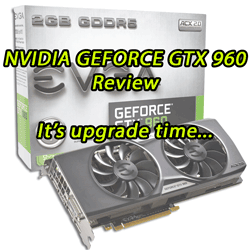
NVIDIA's tradition and legacy has been to always produce a compelling mid range GPU appealing to the 'sweet spot', that is the optimal performance/value offer to the large majority of semi-casual,budget concious PC gamers who would still want decent gaming performance. 2015 is no exception with the GTX 960 replacing the GTX 760 and delivering what NVIDIA has promised of the card, a cool, quiet, over-clockable and value for money card.
In this review we compare the GTX 960 (specifically EVGAs SSC model with ACX 2.0 cooling) to both MSI's GEFORCE GTX 760 HAWK and RADEON R9 270X HAWK, the 960's predecessors from 2013 as well as an overview at how the GTX 960 performs at 4K compared to its bigger brother GTX 980.
We were able to confirm GTX 960 offers more performance at lower power.
- Details
 NVIDIA has a rich history of developing in house tech demos to showcase each new major GPU they develop. Although they are not the only company to do so, ATI later AMD and MATROX did suit, NVIDIA's demos are the most memorable to enthusiasts and industry insiders.
Over the past decade we have had NALU the mermaid (remember her? years before the whole AMD TressFX/NVIDIA hairworks friendly competition), the elves Dawn and Dusk, a rocket powered sled and others.
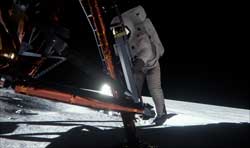
For Maxwell, which NVIDIA claims is the most advanced GPU ever made, the firm felt they had to go one better over these previous 'trivial' demos which were mainly aimed at the 'male gamer market'. This time around,NVIDIA simulated and replicated the Apollo 11 moon landing using Unreal Engine 4, complete with authentic star field, textures, lighting and NASA radio chatter.
Lighting is the key term here, as one of the main purposes of the Apollo 11 demo is to showcase the new Voxel based lighting structure that GTX 980 and GTX 970 can use in supported games to support global illumination. For these hardware the VGLI solution is efficient, fast and as proven by the tech demo, accurate to the source material. And what source material is lighting heavy and well suited for a lighting tech demo? the controversial 'faked' moon landings.
Although NVIDIA demonstrated Apollo 11 tech demo at their global GAME24 launch and gamer event as well as regional editors days for the tech media, users and media could not try the demo for themselves, until now as NVIDIA has finally provided the demo for download.
We used Shadowplay to capture the demo, running on a rig powered with a i7-4790K CPU, MSI Z97 Gaming 7 motherboard and single reference NVIDIA GTX 980 graphics card to capture the demo, complete with performance statistics provided by MSI afterburner software. The demo really needs 2 cards to work optimally and is locked at 1080p. 4K users are out of luck, and no it does not work on other GPUs due to a hardware check.
Our 60 FPS video below shows the entire demo, complete with GPU utilization, frame rate and temperature overlay
Apollo 11 Lunar Landing for GTX 980/970 only can be downloaded here, as well as other NVIDIA tech demos.
- Details
 No two cables are the same, mechanically or electrically. What is undeniable with copper cables is the requirement of higher specification cable assemblies to meet higher bandwidth requirements. Anyone who thinks otherwise is grossly misinformed. This is the case with many types of cables whether they be coaxial cables for RF signals, twisted pair copper for data or telephony transmission.
2014 signaled the arrival of HDMI 2.0 for consumers with displays from Panasonic and Graphics cards from NVIDIA, but what about cables?
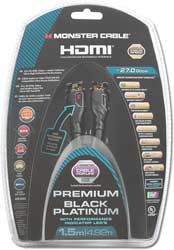
Thanks to an opportunity from Monster Cable, we were able to compare the bandwidth handling capability of several HDMI cables ranging in price using professional equipment, testing whether these cables can handle the minimum 18 Gigabit/s data rate required to support formats under HDMI 2.0.
The cheapest and cheap cables we tested failed at 18 Gigabit/s, meaning if used with HDMI 2.0 devices and very high resolution, colour depth and refresh supported under HDMI 2.0, pixelation,jitter and other issues are possible.
Read on to see a video of the HDMI cable Eye Pattern and Bit Error Rate tests as well as Q&A with Monster Cable.
- Details
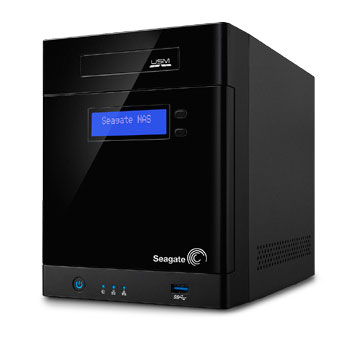
Seagate is relatively unknown for Network Attached Storage and have tried to add their own twist via unique features for their consumer and business oriented models. However, like competing devices, NAS are heavily reliant on hardware specifications to perform as advertised. We review Seagate's 16 TB model for Business and explain why processing power and fast interfaces like USB 3.0 matter for a storage device
- Details
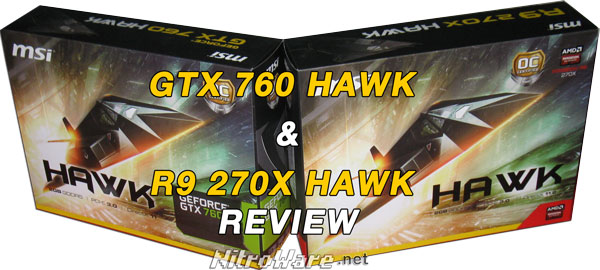
The choice of AMD or NVIDIA graphics is constantly becoming a difficult choice for enthusiasts thanks to an almost level playing field as a result of strong competition between AMD and NVIDIA.
Both brands ave their pros and cons but offer a very similar experience. Choice has become a more personal one, often of brand loyalty than technical.
Add in board partners are constantly releasing custom design graphics cards which squeeze every bit of performance and cooling for both brands equally.
HAWK - MSI's second highest model line (there is Gaming, Hawk and Lightning) offers strong overclocking and tweaking without being too intimidating to the enthusiast who isn't into modding or custom cooling. Their latest version is no exception.
In our fly-off, we were quite impressed with the speed and handling of both the AMD Radeon R9 270X and NVIDIA GeForce GTX 760 based MSI HAWK cards.
Out of the two cards, neither was the outright winner. The winner, however is the consumer. Read on to find out why.