- Huawei P30 Hands-On
- Crucial MX500 1TB SATA Solid State Drive Review
- Intel’s flawed ‘Rangeley’ Atom C2000 processors are still a ticking time bomb
- Eric Broockman Extreme Networks CTO Interview
- Introducing the D-Link COBRA AC5300 Wave 2 MU-MIMO Wi-Fi Modem Router and Triple Band Wi-Fi explained
- VICHYPER - Australian Hyperloop Interview and Tour
- Kaspersky Keynote and Press Conference - Sydney 2017
- ZOTAC NVIDIA GeForce GTX 1050 Australian Review
- Intel Core i7 Extreme Edition (Codename: Broadwell-E) Processor Australian Review
- ASUS ROG GX700 Liquid Cooled Gaming Laptop Video Preview and Analysis.
- Video Tour - NitroWare experiences HP's new Australian Customer Experience Centre and Intel 6th Gen ‘Skylake’ PCs
- Bose SoundTouch 2015 Wireless Speaker Preview
- NVIDIA GeForce Experience Quarter 4 2015 Update Analysis
- NVIDIA GEFORCE GTX 980 Ti Australian Review - TITANic graphics performance for US $649
- HP Zvr 23.6-inch Virtual Reality Display First Look
- NVIDIA GeForce GTX TITAN X Video Card Australian Review
- Battlefield Hardline - Developer Q&A with Visceral Games
- The NVIDIA GEFORCE GTX 960 REVIEW - EVGA SSC Edition
- NVIDIA'S GEFORCE GTX 980 Apollo 11 Lunar Landing Tech Demo tested
- Monster Cable Premium Black 27.7 Gbps high bandwidth HDMI 2.0 cable test
- 4th Gen Intel Core "Devil's Canyon" Processor Family Preview
- Seagate Business 4-Bay 16TB NAS Review
- MSI Radeon R9 270X HAWK & GeForce GTX 760 HAWK Video Card Review
- Adobe Photoshop CC and AMD Radeon GPU Smart Sharpen Benchmark using OpenCL
- AMD Radeon R9 290X Video Card Review and Analysis
- Never Settle: Forever game bundle: What you need to know and what AMD could have done differently.
- Intel 4th Gen 'Haswell' real world gaming performance
- An Evening with Battlefield 4
- Intel 4th Gen Core i7-4770K 'Haswell' CPU Performance Review
- Our experience with AMD's Never Settle Reloaded game bundle - Trouble with Ubisoft Uplay | Updated
- Crucial MX500 1TB SATA Solid State Drive Review
- ZOTAC NVIDIA GeForce GTX 1050 Australian Review
- Intel Core i7 Extreme Edition (Codename: Broadwell-E) Processor Australian Review
- NVIDIA GEFORCE GTX 980 Ti Australian Review - TITANic graphics performance for US $649
- NVIDIA GeForce GTX TITAN X Video Card Australian Review
- The NVIDIA GEFORCE GTX 960 REVIEW - EVGA SSC Edition
- NVIDIA'S GEFORCE GTX 980 Apollo 11 Lunar Landing Tech Demo tested
- Monster Cable Premium Black 27.7 Gbps high bandwidth HDMI 2.0 cable test
- Seagate Business 4-Bay 16TB NAS Review
- MSI Radeon R9 270X HAWK & GeForce GTX 760 HAWK Video Card Review
- Adobe Photoshop CC and AMD Radeon GPU Smart Sharpen Benchmark using OpenCL
- AMD Radeon R9 290X Video Card Review and Analysis
- Intel 4th Gen 'Haswell' real world gaming performance
- Intel 4th Gen Core i7-4770K 'Haswell' CPU Performance Review
- Our experience with AMD's Never Settle Reloaded game bundle - Trouble with Ubisoft Uplay | Updated
- Huawei P30 Hands-On
- Introducing the D-Link COBRA AC5300 Wave 2 MU-MIMO Wi-Fi Modem Router and Triple Band Wi-Fi explained
- ASUS ROG GX700 Liquid Cooled Gaming Laptop Video Preview and Analysis.
- NVIDIA GeForce Experience Quarter 4 2015 Update Analysis
- HP Zvr 23.6-inch Virtual Reality Display First Look
- 4th Gen Intel Core "Devil's Canyon" Processor Family Preview
- Intel 4th Gen Core Haswell CPU and Graphics Preview - See the future of PC graphics through Intel's Iris.
- Cooler Master's Trigger keyboard might just be the perfect gamers keyboard
- ZOTAC "Inner-Beauty" Small Form Factor PC Preview featuring Z77-ITX WiFI and GeForce GTX 680 AMP! Edition
- Intel Desktop Board DX79TO Preview | Sandy Bridge-E performance on a budget
- Gigabyte GZ-X1 Mid Tower ATX Computer Case Preview
- Telstra Turbo 7 Series 3G Wireless Gateway - First Impressions
- Lian-Li Tyr PC-X2000 HTPC/Gaming Chassis Preview
- Intel’s flawed ‘Rangeley’ Atom C2000 processors are still a ticking time bomb
- Never Settle: Forever game bundle: What you need to know and what AMD could have done differently.
- Price Gouging – Australians pay up to twice as much for Microsoft Windows 7 Anytime Upgrade but not for Windows 8 than the US
- Intel CPU Protection Plan for overclockers – Ploy or Promise ?
- Where did all my printer ink go? Part 2 - Epson
- Where did all my printer ink go? Part 1 - Brother
- How to install Windows Server 2008 R2 or Windows 7 using a LSI 3ware 9650SE RAID card
- Issues with Realtek High Definition Audio device driver for Windows XP
- The front audio ports on my PC do not work – why is this and how can I fix this?
- How to create a dedicated Voice over IP headset for your PC - for free. Part 2.
- How to create a dedicated Voice over IP headset for your PC - for free. Part 1.
- Computer motherboard buyer guide - ECS X48T-A
- Making the most of dual onboard Ethernet ports
- How to fix IEEE 1394 FireWire Networking in Windows XP SP3
- DivX 6.5 crashing fix
- Eric Broockman Extreme Networks CTO Interview
- VICHYPER - Australian Hyperloop Interview and Tour
- Kaspersky Keynote and Press Conference - Sydney 2017
- Video Tour - NitroWare experiences HP's new Australian Customer Experience Centre and Intel 6th Gen ‘Skylake’ PCs
- Bose SoundTouch 2015 Wireless Speaker Preview
- Battlefield Hardline - Developer Q&A with Visceral Games
- An Evening with Battlefield 4
- CeBIT Australia 2012 Preview
- Trick or Treat – we bring you tech candy, err the latest Intel X79 Motherboards and other goodies
- Netgear introduces fully open-source Wireless-N Gigabit Router | Cebit Australia 2009
- Exclusive - Altec-Lansing shows off new speakers for 2009 at CeBIT Australia
- CeBIT Australia 2008 | Mtron claims to have worlds fastest Solid State Drive
- Sennheiser @ CeBIT Australia 2008
- Plantronics and Altec Lansing @ CeBIT Australia 2008
- Panasonic @ CeBIT Australia 2008
Reviews
Our Reviews document our full evaluation of hardware, software or a service relevant to the technology sector.
Our reviews are styled to be applicable to readers of any skill not just enthusiasts and power users nor do we focus on benchmarking .
The full gamut of topics are covered and can include :
- Company background
- Product Background
- History of other offerings in the Market segment including past and present competitors
- Ease of use
- Out of the Box Experience
- Analysis of Design, construction and component selection
- Performance Analysis including but not limited to Benchmarking or a single test platform
- Documentation
- Support and Warranty
- Analysis of product avalilbity and Pricepoint
- An overall verdict on the subject being reviewed
Previews are typically intended as 'first impression' or 'first look' type editorials and may include limited or no performance testing/benchmarking data.
By publishing an initial preview article and following up with a full review at a later date our readers can use our preview article to form their opinion on the particular hardware or software and have their questions answered in a timely manner.
- Details
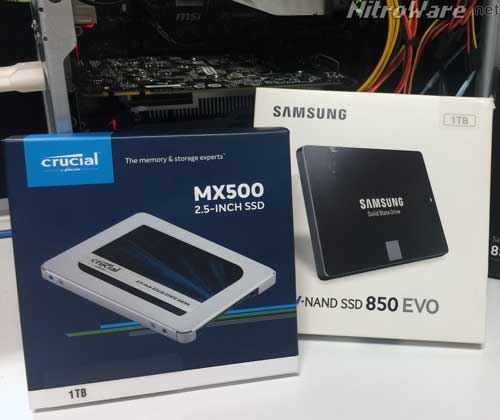
Crucial's MX500 using their 2nd Generation of 3D NAND delivers higher density and cheaper Solid State Storage, improved performance and higher endurance and warranty. We compare the MX500 to the MX300, Samsung's 850 EVO and Intel's 520 series in design, performance and price; explain what is wrong with SSD reviews in general and look at the price difference worldwide between Crucial and Samsung drives including the 860 series. Importantly we try to answer the popular question "Is Crucial as good as Samsung?"
Overall MX500 did deliver an improvement in performance over its previous generation but it is still a touch behind the 850 EVO. However given it is cheaper than both 850 EVO and 860 EVO with the 850 quickly becoming unavailable, the MX500 is our pick for now. Read on for our complete review.
- Details
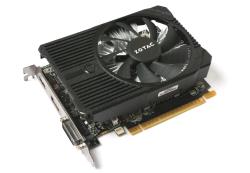 GEFORCE GTX 1050 gives great bang-for-buck GTX 1050 is fast, small, runs cool and is the right price. In this review we compare Zotac's GTX 1050 to Gigabyte's GTX 950 OC WindForce and EVGA's GTX 960 SSC in Dirt Rally, Ashes of the Singularity, Rise of the Tomb Raider, GTA V and Doom to determine if GTX 1050 is worthy of praise. It is.
- Details
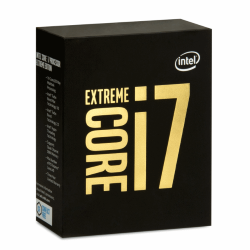 Featuring Australian, Euro and US Pricing
At $1569 US RRP ($2600 AUD street), the i7 6950X may be Intel’s most expensive consumer processor ever.
While the market is slowly getting used to expensive graphics cards and has been used to expensive server processors which can cost up to $5000 each, the concept of a ultra-enthusiast/high-end consumer CPU exceeding US$1000 has hit a sore nerve with some users.
For the launch of Intel’s latest extreme edition CPU, we discuss why the new flagship i7 costs the same as a crappy used car and what benefits it brings to the new trend of ‘mega-tasking’, plus we explain what is probably the key new feature for Broadwell-E, Turbo Boost Max Technology 3.0.
- Details
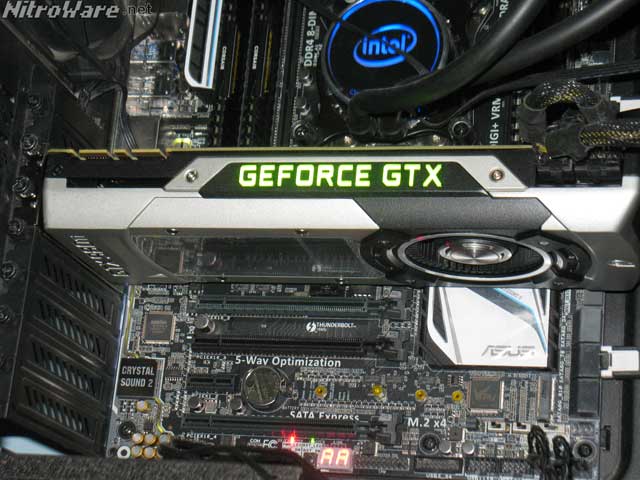
A mere quarter after launching the impressive TITAN X, NVIDIA is launching another powerful flagship graphics card GPU from its silo leveraging the technology and design from the TITAN X GPU to deliver and maintain flagship performance. Enthusiasts wanted TITAN X performance at a lower price and we have got it. In our testing, 980 Ti reference card matched and even beat TITAN X in some benchmarks, yet significantly , faster add-in-board partner custom overclocked 980 Ti are coming. All of which posing a significant thread to AMD’s plans of Fast and ‘Furious’ domination of the high end graphics segment.
NVIDIA’s GTX 980 Ti is the fastest graphics card we have tested. Combined with support for DirectX 12 Feature Level 1 and updates to G-SYNC and Gameworks to optimize the VR experience, the standard has been set for AMD’s upcoming GPU release.
Due to an extremely tight review deadline, we present overall benchmarks in our launch review. Additional Benchmarks, Third Party Board specs and pricing and hardware tear-down/analysis may be added and updated to this review in the days after publishing.
- Details
TITAN X Marks the performance Spot
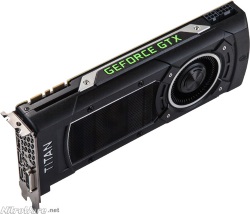 At 7 TeraFlops of compute performance, claiming to be the 'worlds's fastest GPU' the single GPU TITAN X board has big shoes to fill if it wants to also take the title of worlds fastest gaming graphics card from AMD's Dual GPU, Liquid Cooled 11.5 TeraFlop Radeon R9 295 X2.
Older NVIDIA TITAN boards were infamous for their large video memory, double precision floating point calculation and over the top pricing. Armed with Maxwell's utility belt features of Multi-Frame Anti-Aliasing, Voxel Global Illumination, display flexibility and high efficiency. NVIDIA is trying to take the new GM200 chip and TITAN X board in a different direction, aiming at users of VR and multiple 4K displays rather than a entry level board for high precision GPU Computing.
TITAN X combined with Intel's 4th Gen Haswell-E CPU and X99 platform delivers smooth frame rates at Ultra Details when paired with a 4K 60Hz display, in addition to being power efficient. Drawing 300W typical at the wall in popular titles such as Battlefield 4, Batman Arkham Origins and Crysis 3. For now, GM200 and TITAN X is the fastest single GPU money can buy but as history tells is this wont be the case for long.